

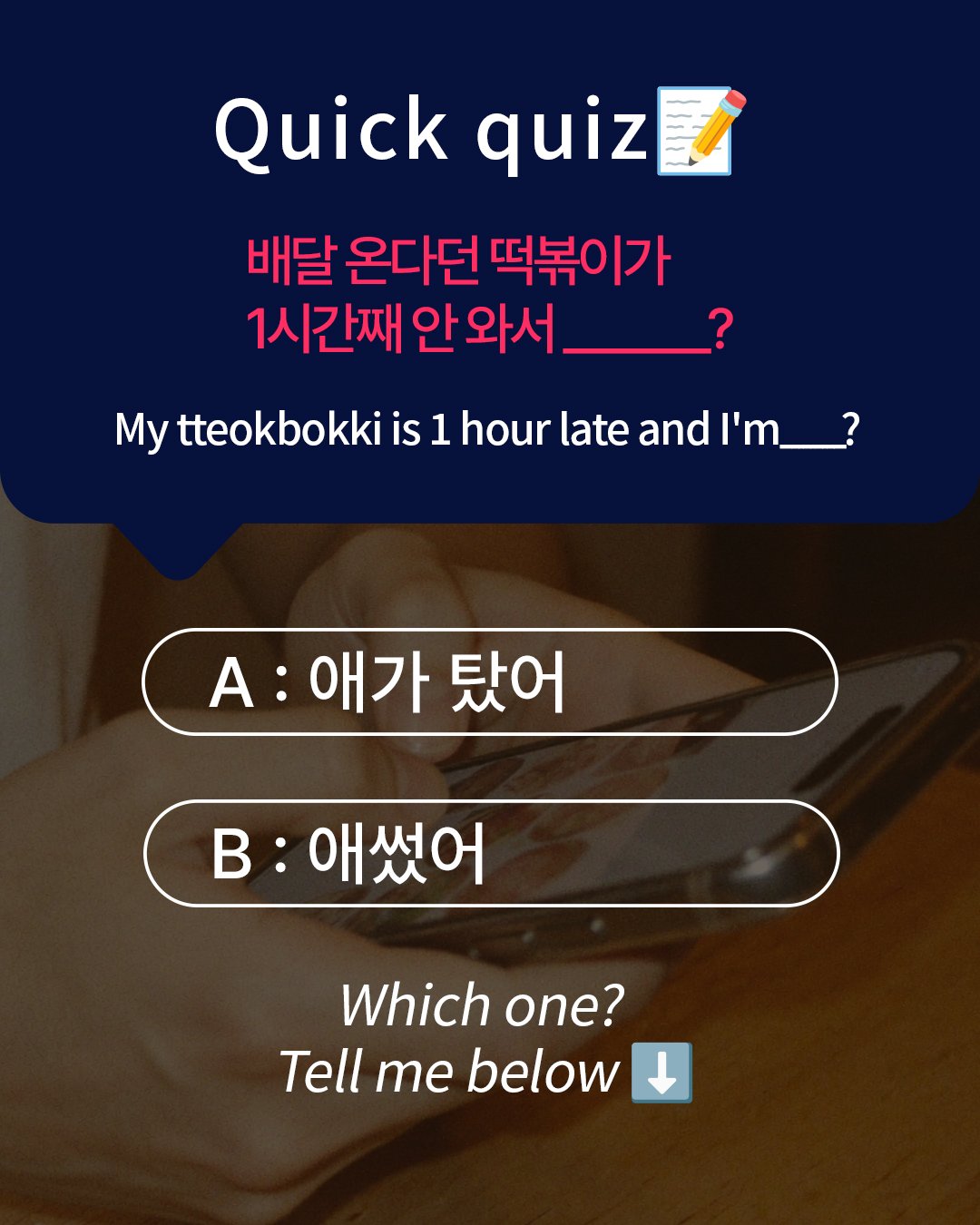
A Korean friend once texted me “너 눈에 밟혀,” and I spent the afternoon glowing about it, sure it was the most romantic thing anyone had ever said to me. It wasn’t. Not exactly.
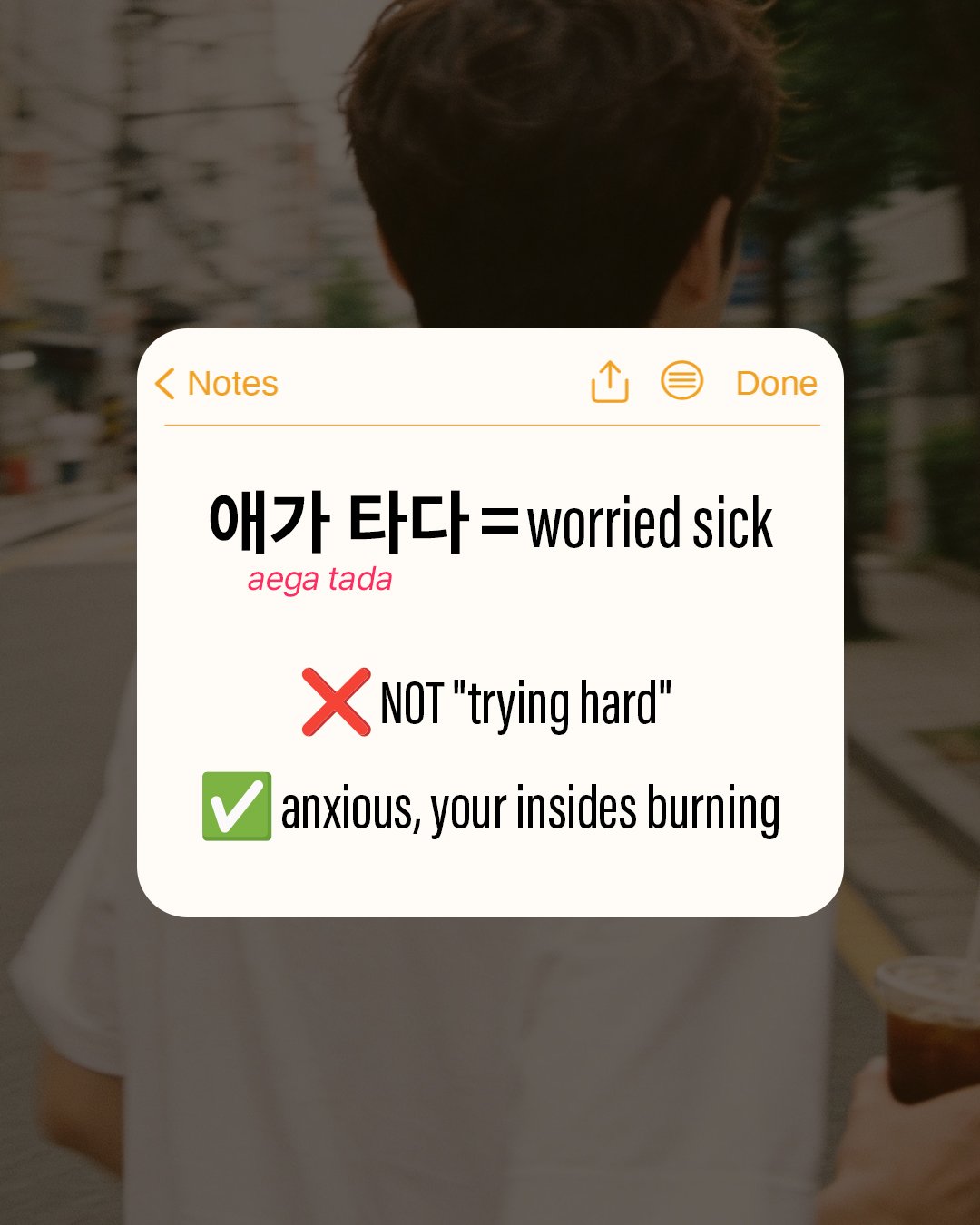
Here’s the embarrassing part. I texted something breezy and grateful right back, and only later, when I finally looked it up, did I understand that 눈에 밟히다 is not the fluttery compliment I’d imagined. It’s much closer to “I can’t stop worrying about you.” My friend wasn’t swooning. She was a little concerned about me. Same handful of syllables I’d been happily misreading, a completely different feeling underneath.
That mix-up sent me down a rabbit hole, because 눈에 밟히다 has a near-twin that trips learners up constantly: 눈에 아른거리다. Both phrases put something 눈에, “in your eyes.” Both describe a person or an image that keeps coming back to you long after you’d expect it to fade. In a drama, in a lyric, in a late-night text, they can look almost interchangeable. They are not. One is tender and sweet. The other is tender and anxious. This is the real difference between 눈에 아른거리다 and 눈에 밟히다, and once you feel it, you won’t mix them up again.
What the two phrases share
Before the differences, it helps to see why they blur together at all. Korean loves to place emotion in the body, and both of these idioms live, literally, in the eyes. Both describe the same basic experience: something has lodged itself in your mind and keeps replaying, uninvited. You picture it while you’re washing the dishes. It surfaces on the walk home. It’s waiting for you when you close your eyes at night.
In English we’d reach for “I can’t stop thinking about it” or “it keeps coming back to me,” and we’d happily use that one sentence for a sunset, an ex, a worried mother, and a puppy home alone. Korean splits that single English feeling into two, and the split is entirely about the emotion driving the replay. That’s the whole game. Not the image itself, but the feeling behind it.
눈에 아른거리다 — the lovely image that won’t fade
Romanized, it’s nune areungeorida. The verb 아른거리다 means to shimmer, flicker, or waver faintly, the way heat ripples above a summer road or a reflection trembles on water. So 눈에 아른거리다 is, very literally, something shimmering in your eyes: a vivid, usually lovely image that keeps floating up in front of you on its own.
The feeling is warm, wistful, a little dreamy. It’s the sight that made an impression and won’t quite leave: a view, a face, a moment you didn’t want to end. Crucially, it is not worry. When something 눈에 아른거려요, you aren’t anxious about it. You’re a little enchanted by it.
눈에 아른거리다 is a beautiful picture your mind keeps replaying because it liked it too much to let go.
Here’s how you’d actually hear it:
- 제주 바다 풍경이 계속 눈에 아른거려. (jeju bada punggyeongi gyesok nune areungeoryeo) “The Jeju sea keeps floating in front of my eyes.” You went home, but the view didn’t leave with you.
- 그날 밤 불꽃놀이가 아직도 눈에 아른거려. (geunal bam bulkkonnoriga ajikdo nune areungeoryeo) “That night’s fireworks still shimmer in my mind.”
- 할머니 웃는 얼굴이 눈에 아른거려. (halmeoni unneun eolguri nune areungeoryeo) “I keep seeing Grandma’s smiling face.” Fond, a touch bittersweet, but never frightened.
If you can swap in the English “I keep picturing that lovely thing,” you want 아른거리다.
눈에 밟히다 — the worry you can’t set down
This one is nune balpida, and the pronunciation deserves a warning before anything else. It’s spelled 밟히다, but it is not read “bap-hi-da.” The final consonant cluster collapses and it comes out bal-pi-da. The form you’ll hear most, 밟혀, sounds like bal-pyeo, not “bal-hyeo.” Say it the wrong way and a listener may not catch the word at all, so it’s worth drilling out loud: 눈에 밟혀, nune bal-pyeo.
Now the meaning, which is where learners go astray. 밟다 means to step on or tread on something. 밟히다 is the passive: to be stepped on. So 눈에 밟히다 is, astonishingly, “to be stepped on inside your eyes.” It’s a heavier, achier image than the gentle shimmer of 아른거리다, and the emotion matches. When someone 눈에 밟혀요, they keep appearing in your mind because you are worried about them. You picture them precisely because you care and can’t quite relax while they’re on your mind. It tugs. It nags. It sits on your chest a little.
It’s used most often for someone vulnerable you feel responsible for: a child, a pet, an aging parent, someone you had to leave behind.
눈에 밟히다 is a worry your mind keeps replaying because some part of you can’t set it down.
In the wild:
- 집에 혼자 있는 강아지가 눈에 밟혀. (jibe honja inneun gangajiga nune balpyeo) “My puppy home alone keeps weighing on my mind.” You’re out at dinner, but half of you is still at home with the dog.
- 아픈 애를 두고 오니까 하루 종일 눈에 밟혔어. (apeun aereul dugo onikka haru jongil nune balpyeosseo) “I left my sick kid behind, so they were on my mind all day.”
- 그 직원 표정이 자꾸 눈에 밟혀. (geu jigwon pyojeongi jakku nune balpyeo) “That employee’s face keeps nagging at me.” You noticed they looked upset, and now you can’t stop feeling you should have said something.
If the English is closer to “I can’t stop worrying about them,” you want 밟히다.
The difference in one line
Same “it keeps coming to mind,” opposite reason.
- 눈에 아른거리다: a lovely image lingers. The emotion is admiration, longing, delight. It makes you smile.
- 눈에 밟히다: a worry lingers. The emotion is concern, guilt, tenderness. It makes your chest ache a little.
So when my friend texted 너 눈에 밟혀, she wasn’t calling me unforgettable in a swoony way. She was telling me she kept worrying about me. Still sweet, genuinely. Just a different kind of sweet than I’d assumed.
A quick way to remember
Lean on the literal images. 아른거리다 shimmers, like a pretty mirage you don’t want to blink away, a good feeling. 밟히다 gets stepped on, something tender being trodden underfoot, and it aches, a worried feeling. Shimmer is pleasant; stepped-on hurts. That single contrast will carry you through almost every real sentence.
The mistakes learners make with 눈에 밟히다
A few predictable slips, all easy to fix once you can see them coming.
The first is using 밟히다 for something beautiful. If a gorgeous sunset “눈에 밟혀,” a Korean listener will picture you fretting over the sunset like it’s a lost child. Lovely things shimmer; they don’t get stepped on. Use 아른거리다.
The second is the reverse: using 아른거리다 for genuine worry. If your sick friend is on your mind all day and you say they “눈에 아른거려,” it sounds oddly like you’re admiring them from a distance rather than worrying. Reach for 밟히다.
The third is the pronunciation trap we already covered: reading 밟혀 as “bal-hyeo.” It’s bal-pyeo. Get this one wrong often enough and people simply won’t recognize the word you’re reaching for.
Test yourself
QUIZ 1
A K-pop fan is talking about a fan-sign event:
어제 팬싸인회에서 본 우리 오빠 웃는 모습이 계속 눈에 ______.
“My bias’s smile from yesterday’s fan-sign keeps ______ in my eyes.”
A. 아른거려 (areungeoryeo) · B. 밟혀 (balpyeo)
The answer is A, 아른거려. His smile is a lovely image replaying in her head, pure delight with no worry attached. Choose B and she’d be telling everyone she’s worried sick about her bias’s smile, which is a very different and slightly alarming sentence.
QUIZ 2
One more, from the other side:
군대 간 동생이 밥은 잘 먹는지 자꾸 눈에 ______.
“I keep ______ about my younger sibling who left for the army, wondering if they’re eating okay.”
Here it’s 밟혀. The whole sentence is soaked in worry, so the worry-word wins.
Why this pair is worth the trouble
It would be easier if Korean just had one phrase for “I can’t stop thinking about it,” the way English mostly does. But that gap is exactly what makes these two worth learning. They show you something about how the language works: emotion isn’t announced so much as placed in the body, and the precise physical image, a shimmer versus a footstep, is what carries the feeling. Learn this one pair well and you start hearing that same logic everywhere. It’s the kind of Korean the textbooks skip and the dramas quietly lean on.
A few common questions
Is 눈에 밟히다 only used about people?
Mostly it’s about people and animals, anything you can feel protective of or responsible for. You’ll hear it about a pet, a child, a parent, a struggling coworker. It can stretch to a situation you feel uneasy about, but at heart it carries worry, so it rarely fits a purely neutral object.
Can 눈에 아른거리다 ever be sad?
It can be bittersweet, yes. Picturing someone you miss, or a moment that’s already gone, can ache gently. But the ache is longing, not anxiety. You aren’t worried about the thing; you just wish you were still standing in front of it.
How do I pronounce 밟히다 so people understand me?
Say bal-pi-da, and for the common form 밟혀, say bal-pyeo. Let the consonants merge into a soft “p” sound and slow it right down at first. Clear beats fast every time.
눈에 아른거리다 vs 눈에 밟히다, at a glance
- Both mean something keeps coming to mind; the difference is the emotion behind it.
- 눈에 아른거리다: a lovely image shimmers and lingers. Delight, not worry.
- 눈에 밟히다: someone you worry about weighs on you. Concern, not admiration.
- Pronounce 밟혀 as bal-pyeo, never “bal-hyeo.”
- Beautiful things shimmer; people you worry about get “stepped on” in your eyes.
So the next time a Korean friend tells you something 눈에 밟혀, you’ll know they aren’t only flattering you. They’re a little worried about you, in the softest possible way. And when a view or a face keeps shimmering back to you, you’ve finally got the exact word for it. That’s the quiet payoff of learning the Korean they don’t teach you: you stop translating the feeling and start feeling it in Korean.